


21278
1 500 €
In stockSilver Reliquary with Major Relics of Saint Hilary of Poitiers + Episcopal Authentication Document, 1873Ex ossibus – Bishop, Confessor, and Doctor of the Church
With Episcopal Authentication Document, 1873
Dimensions: 22 × 16 cm
An outstanding 19th-century silver reliquary, finely crafted and richly ornamented in an elaborate Baroque Revival style, containing major bone relics (ex ossibus) of Saint Hilary of Poitiers, one of the foremost theologians and Doctors of the early Western Church.
The reliquary, measuring 22 × 16 cm, features an oval form with a deeply repoussé and chased silver frame adorned with scrolling acanthus leaves and floral motifs. The glazed front reveals a substantial bone fragment, reverently mounted on a crimson silk ground and secured with traditional metallic threads. An original handwritten parchment label identifies the relic as belonging to S. Hilarii Pictaviensis Episcopi, Confessoris et Ecclesiae Doctoris.
The reverse retains its original red silk cross-bands and intact episcopal wax seals, testifying to the reliquary’s canonical sealing and preservation. These elements confirm that the relic has not been opened or altered since its official authentication.
Accompanying the reliquary is its original Latin episcopal authentication document, dated 1873, issued by the Diocese of Tulle. The document formally certifies the relic’s authenticity, proper enclosure, and authorization for public veneration in accordance with the canonical norms of the Roman Catholic Church.
Saint Hilary of Poitiers (c. 310–367)
Saint Hilary of Poitiers, often revered as the “Athanasius of the West,” was a pivotal figure in the theological struggles of the 4th century. Born into a pagan family in Roman Gaul, he converted to Christianity as an adult and was subsequently elected Bishop of Poitiers.
He is best known for his monumental theological work De Trinitate, in which he defended the doctrine of the Trinity against Arianism with exceptional clarity and depth. His unwavering commitment to Nicene orthodoxy led to his exile by imperial decree, during which he continued to write, preach, and influence Christian thought throughout the Latin West.
For his sanctity, learning, and enduring doctrinal influence, Saint Hilary was later proclaimed a Doctor of the Church. His feast day is celebrated on 13 January. Relics of Saint Hilary, especially ex ossibus, are rare and highly venerated due to his foundational role in Western Christian theology.
Episcopal Authentication – 1873
The accompanying authentication document (instrumentum authenticum) was issued in 1873 by the Diocese of Tulle and signed by the reigning diocesan bishop, acting with full canonical authority. Such documents were essential under Church law to guarantee the legitimacy, provenance, and devotional use of relics.
The bishop attests that the relic:
- derives from authorized ecclesiastical sources,
- was properly examined and identified,
- was enclosed in a suitable reliquary,
- was sealed with episcopal wax to prevent tampering and was approved for public veneration.
The survival of both the reliquary with intact seals and the original 19th-century document greatly enhances the historical, devotional, and collectible significance of this ensemble.
Significance
This complete and well-preserved group—comprising a large silver reliquary (22 × 16 cm), major ex ossibus relics, intact episcopal seals, and the original authentication document—represents a rare and important example of 19th-century ecclesiastical art and devotion.
Such objects were typically commissioned for churches, chapels, or episcopal collections and are seldom encountered today in this intact and documented condition.
------ Ask for authenticity documents in private messages at info@saintsrelics.com ------
Another items fromRELICS
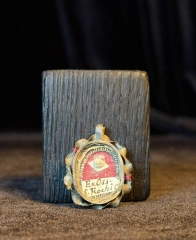
Sterling silver theca - reliquary with relic of St. Roch, Confessor
1 200 €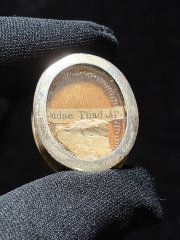
RESERVED - Relic of Saint Jude Thaddeus the Apostle in pure sterling silver reliquary
 9 800 €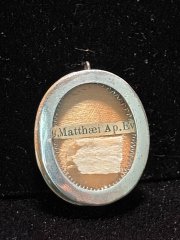
Relic of Saint Matthew the Apostle and Evangelist in pure sterling silver reliquary
1 500 €
Rare 19th-Century Silver Reliquary with Relic of Saint Pelagia of Tarsus
1 100 €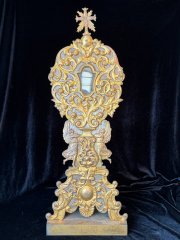 2 500 €